To see all the articles in full click here for the Wiley Online Library
Contents of Vol. 34, 2011
Vol. 34, no. 4, October 2011

- Early Toarcian source-rock potential in the Central High Atlas Basin (Central Morocco): Regional distribution and
depositional model
S. Bodin (NARG, University of Manchester) et al. view abstract - Light hydrocarbons in soil gas above prospective oil- and gas-bearing structures: Pomeranian Synclinorium, NW Poland
H. Sechman (AGH University of Science and Technology, Krakow), M. Dzieniewicz and A. Nowicka view abstract - Hydrocarbon habitat of the Sedano trough, Basque-Cantabrian Basin, Spain
by C. Beroiz (University of Madrid) and A. Permanyer (University of Barcelona) view abstract - Syndepositional tectonic controls and palaeo-topography of a Permian tight gas reservoir in NW Germany
A. A. Vackiner (Aachen University) et al. view abstract - Petroleum accumulations and inversion structures in the Xihu Depression, East China Sea Basin
F.-L. Yang, X. Xu, W.-F. Zhao and Z. Sun (Tongji University, Shanghai) view abstract - Index, volume 34, 2011
- International Events
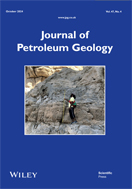
- Cover: Cover illustrates a patented apparatus for collecting samples of soil gas developed by a team from AGH University of Science and Technology, Krakow. The apparatus uses a steel probe to collect samples for organic geochemical analysis. Sechman et al. (pp. 365 - 386) used this apparatus to conduct a soil gas survey in NW Poland. Anomalies in soil gas concentrations were linked to leakage along faults and structural discontinuities from subsurface hydrocarbon accumulations. Photos by Dr H. Sechman and Dr M. Dzieniewicz.
Vol. 34, no. 3, July 2011
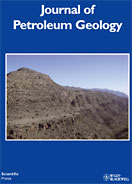
- Near well-scale heterogeneities in a Khuff outcrop equivalent (Saiq Plateau, Al Jabal Al Akhdar, Sultanate of Oman)
by M. Zeller (University of Tuebingen) et al. view abstract - Geochemistry and origin of crude oils and condensates from the Central Persian Gulf, Offshore Iran
by A. Fathi Mobarakabad, A. Bechtel, R. Gratzer, E. Mohsenian and R.F. Sachsenhofer (University of Leoben, Austria) view abstract - Hydrocarbon potential of Middle Jurassic coaly and lacustrine and Upper Jurassic - lowermost Cretaceous marine source
rocks in the Søgne Basin, North Sea
by H. I. Petersen (GEUS) et al. view abstract - Reservoir quality assessment and petrofacies of the Lower Cretaceous siliciclastic, carbonate and hybrid arenites from
the Jequitinhonha Basin, Eastern Brazil
by C. M. Jardim (Petrobras), L. F. De Ros and J. M. Ketzer view abstract - International Events
- Cover: The outcrop photograph shows an exposure of Upper Permian and Lower Triassic carbonates (equivalent to the Upper Khuff Formation) on the Saiq Plateau in the Oman Mountains. The section here represents the uppermost 150 m of the Khuff-equivalent beds overlain by 50 m of the Sudair-equivalent succession (regional seal). The contact between the Permian Saiq Formation (dark grey) and the Triassic Mahil Formation (lighter grey) is visible as a colour contrast and can be traced on satellite images over tens of km. These rocks are considered in detail in the paper by Zeller et al. on pp. 241 - 260 of this issue. Photo: M. Zeller.
Vol. 34, no. 2, April 2011
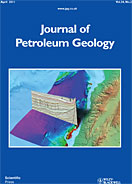
- Source rock potential of the Upper Jurassic - Lower Cretaceous succession in the Southern Mesopotamian Basin, Southern
Iraq
by Q. Abeed (RWTH Aachen University), A. Alkhafaji and R. Littke view abstract - The petroleum prospectivity of Lebanon: an overview
F. H. Nader (IFP Energies nouvelles) view abstract - Late Cretaceous tectonic and sedimentary evolution of the Bandar Abbas area, Fars region, southern Iran
by A. Piryaei (NIOC) et al. view abstract - Mass balance calculations for different models of hydrocarbon migration in the Jeanne d'Arc Basin, offshore Newfoundland
by F. Baur (Aachen University) et al. view abstract - Hydrocarbons in the Middle Miocene Jeribe Formation, Dyala Region, NE Iraq
by T. K. Al-Ameri (University of Baghdad), J. Zumberge and Z. M. Markarian view abstract - Condensates in the PY30-1 structure, Panyu Uplift, Pearl River Mouth Basin, South China Sea: evidence for hydrothermal
activity associated with petroleum migration and accumulation
by Xiaowen Guo (China University of Geosciences) et al. view abstract - International Events
- Cover: Background shows the coast of Lebanon and adjacent offshore. The coloured area represents the base-Messinian surface and shows potential sub-salt leads. A regional seismic 2D GeoStreamer line extending from the Levant Margin westwards to the Levantine Basin illustrates key interpreted horizons. Note that the grid map is shifted down in time compared to the seismic line. The hydrocarbon prospects of on- and offshore Lebanon are reviewed by Nader on pp. 135-156 of this issue. Image courtesy of Petroleum Geo-Services.
Vol. 34, no. 1, January 2011
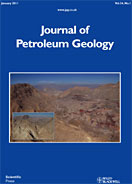
- Neotectonic controls on petroleum accumulations, offshore China
Z.S. Gong (CNOOC, Beijing), L. F. Huang and P. H. Chen view abstract - Multi-phase Hormuz salt diapirism in the Southern Zagros, SW Iran
H. Motamedi (NIOC, Tehran), M. Sepehr, S. Sherkati and M. Pourkermani view abstract - Membrane seal leakage in non-fractured caprocks by the formation of oil-wet flow paths
G. M. G. Teige (Statoil, Norway), C. Hermanrud and H. G. Rueslåtten view abstract - Carboniferous non-marine source rocks from Spitsbergen and Bjørnøya: Comparison with the Western Arctic
J. H. van Koeverden (University of Oslo), D. A. Karlsen and K. Backer-Owe view abstract - Organic geochemistry of potential source rocks in the Tertiary Dingqinghu Formation, Nima Basin, Central Tibet
Licheng Wang (China University of Geosciences) et al. view abstract - >Hydrocarbon potential of the Upper Cretaceous succession at well 16/U-1, onshore Qamar Basin, eastern Yemen
A. S. Alaug (Taiz University, Yemen) view abstract - International Events
- Cover: Cover images show aerial views of the Kuh-e Nakh salt diapir in the Zagros foldbelt, SW Iran. The diapir,
composed of the Infracambrian Hormuz complex, is located in the eroded core
of the Kuh-e Nakh anticline. The complex is dominated by Hormuz salt with
minor anhydrite, dolomite, siltstones and marls (reddish and white colours
in the main photograph). Inset shows steeply dipping and overturned Cretaceous-Tertiary
strata at the margin of the diapir. The development of Kuh-e Nakh and other
diapiric structures in SW Iran is discussed by Motamedi et al. on pp 29 -
44 of this issue.
Photos by J. P. Callot (IFP Energies nouvelles), reproduced by permission of the NIOC.
Sign up to receive free email alerts containing the Table of Contents for the Journal of Petroleum Geology
Sample Issues
The January 2023 issue (vol 46,1) is available as free-to-read at the Wiley Online Library.
Please click here for more details